Monday, October 29, 2012
But it's a Design school!
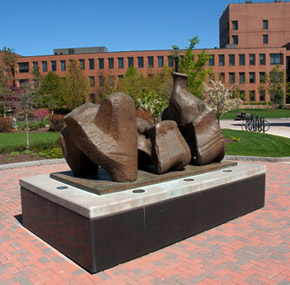
My university is not just an engineering school, it's a design school, too. We have very good programs in film, in fine art photography, in industrial design. (We're also getting an architecture program, in spite of having no architects on the faculty.)
But here we are, #9 on the Princeton Review's list of 10 UGLY campuses! Hey, they picked one of the nicest shots they could for the slide show!

Recent Chronicle Articles on Women in Academe
Two articles about women's representation in the sciences and philosophy have come out in the last week. One is behind a paywall and focuses on women in philosophy and history: http://chronicle.com/article/In-Terms-of-Gender/135306/
The other tracks women's publishing records in the sciences and makes a few nice points which can be generalized to other areas of research: http://chronicle.com/article/The-Hard-Numbers-Behind/135236/
(The most interesting parts of this article come toward the end, so it's worth reading it in full.)
The first of these, which features Sally Haslanger in a photo, goes over familiar ground. For instance, the speculation that women are turned off by the male canon, but with no explanation of why that would hold in philosophy but not English. And the Rutgers female graduate students' defense of their department, in which they say
Another familiar idea to explain the absence of women makes its appearance:
But this ignores the prevalence of women in the sciences, including in those areas, such as molecular biology, biochemistry, and chemical engineering, which use technical skills and highly specialized problem areas. Women make up over 50% of undergrads in the life sciences and a larger proportion of majors in chemistry than in philosophy. What it does do is to put the blame on women for being underprepared or selling themselves short. What it doesn't do is take responsibility for the social environment, which is a sufficient explanation for philosophy's shortfall.
The article on women's record of publishing in the sciences is more sophisticated and offers a more complex picture of women's changing status. Women are not let off the hook--the article suggests that they submit fewer papers to journals. But this observation is situated in the complex social setting women find themselves in, for instance with obligations for childcare and eldercare and different expectations for non-research academic work.
The article also shows some of the simplistic thinking that comes to the fore when we discuss the status of women in research, even by people whose other professional work is supremely complex and nuanced. For instance, there is often an assumption that if women aren't facing active, open hostility and obvious discrimination, then nothing is wrong. In that case, any choices they make to cluster in subfields, to publish at lower rates, to collaborate less, or to accept a lower author ranking are chalked up to their own lack of proficiency rather than the social setting.
The other tracks women's publishing records in the sciences and makes a few nice points which can be generalized to other areas of research: http://chronicle.com/article/The-Hard-Numbers-Behind/135236/
(The most interesting parts of this article come toward the end, so it's worth reading it in full.)
The first of these, which features Sally Haslanger in a photo, goes over familiar ground. For instance, the speculation that women are turned off by the male canon, but with no explanation of why that would hold in philosophy but not English. And the Rutgers female graduate students' defense of their department, in which they say
their views are taken seriously, they are supported by faculty, and they in turn are role models for undergraduate women.If this is true, then what more could one want? One may doubt their word, but it seems entirely conceivable to me that a department may be woman-friendly without anyone doing specific work in feminist philosophy. Feminist work is important, but it needn't be done everywhere--there are good reasons for a department specializing. The proof is in the success and well-being of the women faculty and students.
Another familiar idea to explain the absence of women makes its appearance:
"Philosophy, in the English speaking world, has migrated closer to the sciences, and places a high premium on technical skills, logic, and dividing problems into lots of small pieces," Mr. Leiter says.
But this ignores the prevalence of women in the sciences, including in those areas, such as molecular biology, biochemistry, and chemical engineering, which use technical skills and highly specialized problem areas. Women make up over 50% of undergrads in the life sciences and a larger proportion of majors in chemistry than in philosophy. What it does do is to put the blame on women for being underprepared or selling themselves short. What it doesn't do is take responsibility for the social environment, which is a sufficient explanation for philosophy's shortfall.
The article on women's record of publishing in the sciences is more sophisticated and offers a more complex picture of women's changing status. Women are not let off the hook--the article suggests that they submit fewer papers to journals. But this observation is situated in the complex social setting women find themselves in, for instance with obligations for childcare and eldercare and different expectations for non-research academic work.
The article also shows some of the simplistic thinking that comes to the fore when we discuss the status of women in research, even by people whose other professional work is supremely complex and nuanced. For instance, there is often an assumption that if women aren't facing active, open hostility and obvious discrimination, then nothing is wrong. In that case, any choices they make to cluster in subfields, to publish at lower rates, to collaborate less, or to accept a lower author ranking are chalked up to their own lack of proficiency rather than the social setting.
John J. Siegfried, a professor emeritus of economics at Vanderbilt University who has worked with the economic association, says there is not much that academe can do about gender imbalances, short of forcing women into subfields that may not interest them. "What's the solution?" he asks. "Should I tell women starting a Ph.D. that they should only study finance or econometrics?"It can seem obvious to the women who consider work in certain subfields that it is controlled by crony networks, or that newcomers are more or less welcomed. This is one of the phenomena which is the target of the Gendered Conference Campaign.
Monday, September 24, 2012
Markets, and also Media Influences on Thought
This post is about Pornography. But I've learned better than to put that in the post title, or it attracts all kinds of comments which then have to be deleted for the sake of decency.
My Feminist Theory course has been discussing pornography, and the reading assignment last week was a well-structured examination of the issues that Catherine MacKinnon raised in the mid-1980s. The pornosphere was so different then, though, that my students had a hard time understanding what the debate was about.
Their obtuseness didn't just seem a result of different experiences with porn than the easy access to Playboy and little else that was a feature of life before the internet. Their premises about cultural influence seemed markedly different from mine and from those of the textbook chapter we read. Most of the students weren't disagreeing with MacKinnon's point. Beyond disagreement, there seemed to be a failure of comprehension. Some of the sticking points:
1. MacKinnon and other feminists started by formulating a definition of porn that differed from the Supreme Court. While the Supreme Court's definition uses criteria such as 'obscenity,' 'prurience,' and 'community standards,' the feminists don't mind materials that are sexually explicit or unusual ("kinky"). Their problem is with violence and with acts and attitudes which are dehumanizing. My students' response was that "you can't change a definition--just look it up in the dictionary." What's going on here? A failure to understand philosophical methods? A failure to see the role of law in changing culture? A failure to accept that culture can change and be changed, that it's not simply given? I don't have a sense of the reason for the strenuous opposition to MacKinnon's move of using a term ("porn") to specify a category different from the category the term usually specifies.
2. Once they understood that MacKinnon was only talking about a subset of porn, the students' response was "don't watch what you don't like." And also, "if enough people like her want more sex-positive porn, then the market will respond." Thus, all culture and all means of controlling culture were reduced to markets. And furthermore, there was the unstated belief that markets are responsive and can't (or shouldn't) be controlled.
3. Finally, the majority of the class resisted the idea at the heart of MacKinnon's critique--that the content of porn could shape how people think about sexual possibilities. That is, though they agreed that many young people look to porn as a form of sex ed, they disagreed that porn influenced how people think about what's appropriate or inappropriate behavior in sexual relationships. Further, there seemed to be general disagreement with the statement that media affect how people think. Instead, they believe that viewers exercise free choice in what they watch, and they only choose to watch things that reflect what they already think. There was strong resistance to the idea that what you watch can change your perception of the world.
My Feminist Theory course has been discussing pornography, and the reading assignment last week was a well-structured examination of the issues that Catherine MacKinnon raised in the mid-1980s. The pornosphere was so different then, though, that my students had a hard time understanding what the debate was about.
Their obtuseness didn't just seem a result of different experiences with porn than the easy access to Playboy and little else that was a feature of life before the internet. Their premises about cultural influence seemed markedly different from mine and from those of the textbook chapter we read. Most of the students weren't disagreeing with MacKinnon's point. Beyond disagreement, there seemed to be a failure of comprehension. Some of the sticking points:
1. MacKinnon and other feminists started by formulating a definition of porn that differed from the Supreme Court. While the Supreme Court's definition uses criteria such as 'obscenity,' 'prurience,' and 'community standards,' the feminists don't mind materials that are sexually explicit or unusual ("kinky"). Their problem is with violence and with acts and attitudes which are dehumanizing. My students' response was that "you can't change a definition--just look it up in the dictionary." What's going on here? A failure to understand philosophical methods? A failure to see the role of law in changing culture? A failure to accept that culture can change and be changed, that it's not simply given? I don't have a sense of the reason for the strenuous opposition to MacKinnon's move of using a term ("porn") to specify a category different from the category the term usually specifies.
2. Once they understood that MacKinnon was only talking about a subset of porn, the students' response was "don't watch what you don't like." And also, "if enough people like her want more sex-positive porn, then the market will respond." Thus, all culture and all means of controlling culture were reduced to markets. And furthermore, there was the unstated belief that markets are responsive and can't (or shouldn't) be controlled.
3. Finally, the majority of the class resisted the idea at the heart of MacKinnon's critique--that the content of porn could shape how people think about sexual possibilities. That is, though they agreed that many young people look to porn as a form of sex ed, they disagreed that porn influenced how people think about what's appropriate or inappropriate behavior in sexual relationships. Further, there seemed to be general disagreement with the statement that media affect how people think. Instead, they believe that viewers exercise free choice in what they watch, and they only choose to watch things that reflect what they already think. There was strong resistance to the idea that what you watch can change your perception of the world.
Monday, September 17, 2012
More Examined Than Some
A former student recommends The Partially Examined Life podcast and blog.
[Whoa! Is that a St. John's College t-shirt on one of the bloggers? What IS the ratio of philosophers to others at that school? Not that they have majors.]
[Whoa! Is that a St. John's College t-shirt on one of the bloggers? What IS the ratio of philosophers to others at that school? Not that they have majors.]
Saturday, September 15, 2012
Interviews at 3AM
It's apparent that since I avoid reading the most-read philosophy blog I do sometimes miss a gem.
And so here I am, on a Saturday evening, finding some thoughtful weekend reading: Richard Marshall's interviews with philosophers at 3AM magazine.
Earlier this week:
Huw Price on deflationary accounts of truth and tenseless time
Last week:
Simon Blackburn, too, touches on deflationism (if these interviews were all one read, wouldn't one develop a healthy attitude toward truth?), but also on relativism and--true to his style, so to speak--just about everything else.
And from the dimly remembered days of summer:
Elizabeth Anderson, who gives a shout-out both to Dewey and to the Levellers.
Update: As I dig deeper into a pint of pistachio ice cream and into my Saturday evening reading, I said to my nearby Saturday evening philosophy-reading friend, "Huh, I never really thought that the second thing someone would say about Huw Price, after 'ice cool,' is that he's a pragmatist. I guess he is a pragmatist, sort of. But it's not the first or second thing to say."
Response: Sure, he's a pragmatist. Like Brandom's a pragmatist.
Me: Elizabeth Anderson--now there's a pragmatist. John Dewey's right there at her elbow. Her work is always socially engaged. Price and Brandom? That's affinity with pragmatism not identity with pragmatism.
Response: Why's it matter?
Me: It's an honorific.
Response: True that.
And so here I am, on a Saturday evening, finding some thoughtful weekend reading: Richard Marshall's interviews with philosophers at 3AM magazine.
Earlier this week:
Huw Price on deflationary accounts of truth and tenseless time
Last week:
Simon Blackburn, too, touches on deflationism (if these interviews were all one read, wouldn't one develop a healthy attitude toward truth?), but also on relativism and--true to his style, so to speak--just about everything else.
And from the dimly remembered days of summer:
Elizabeth Anderson, who gives a shout-out both to Dewey and to the Levellers.
Update: As I dig deeper into a pint of pistachio ice cream and into my Saturday evening reading, I said to my nearby Saturday evening philosophy-reading friend, "Huh, I never really thought that the second thing someone would say about Huw Price, after 'ice cool,' is that he's a pragmatist. I guess he is a pragmatist, sort of. But it's not the first or second thing to say."
Response: Sure, he's a pragmatist. Like Brandom's a pragmatist.
Me: Elizabeth Anderson--now there's a pragmatist. John Dewey's right there at her elbow. Her work is always socially engaged. Price and Brandom? That's affinity with pragmatism not identity with pragmatism.
Response: Why's it matter?
Me: It's an honorific.
Response: True that.
Wednesday, September 12, 2012
Gendered Conference Campaign
The Gendered Conference Campaign has designed a petition to publicize the importance of attending to inclusive gender participation among professional philosophers. To sign the petition is to commit to paying attention to whether or not women are included or excluded from organized events (conferences, speaker series), from invitations to contribute to edited volumes, and for other forms of work which are typically organized through precisely those informal networks which tend to leave out women.
The petition also includes a set of links to help jog our memories about the women who work in various subfields:
"Information on female experts in various areas is available here, here, here,here."
The petition also includes a set of links to help jog our memories about the women who work in various subfields:
"Information on female experts in various areas is available here, here, here,here."
Friday, September 07, 2012
Bad writing and writing badly
Siris writes about Jonah Lehrer and the scandal of his recycled, misquoted, and plagiarized writing for the New Yorker and Wired. Most of the work that has been called into question appeared as blog posts or in books.
A news (NYT) article is here, and a more extensive analysis of what he did wrong and why it was wrong is on Slate here.
Siris makes an excellent point about the differences between journalistic writing and academic writing and that though they are similar in that authors in each area strive to say something distinctive or in a distinctive way, the ways in which they build their reputations are different.
That line becomes blurred, though, when academic writing becomes judged as a matter of quantity without concern for the content of what is said (e.g. in merit evaluations that simply quantify number of articles published) or the process of vetting (selectivity of journals, % of their articles that are submitted rather than invited, forms of peer review). I remember reading about this problem and an effort to combat it a while back, but I haven't heard much in the meantime about its effects.
Charles Seife, the author of the Slate article makes a subtle move, highlighting his own control over his writing and the way that a point can be made available to certain readers without making an unfair or explicit accusation. Seife shows text that Lehrer wrote next to previously published but very similar text by other authors. The explicit message is that Lehrer plagiarized others' work. What is not said but can't be missed is that in every case the original passage conveys more detail in fewer words using more interesting sentence structure. A secondary question follows the ethical issue of plagiarism--how does a writer rise to stardom when his material is not (all) original and his writing is not in the best style?
And now a serious question. I've assigned Lehrer's "The Truth Wears Off," an article in the New Yorker, in my philosophy of science class later this term. The New Yorker has posted notes on Lehrer's blog posts identifying the recycled material but has not made a note about this article. On the other hand, the Wired piece makes it seem as though everything Lehrer has written should be called into question, not just for having been recycled (which doesn't bother me in this particular context) and not just because of plagiarism, but also because of factual inaccuracies and unsupported claims. The New Yorker's fact-checking department has a sound reputation, so should I keep the article on the syllabus?
A news (NYT) article is here, and a more extensive analysis of what he did wrong and why it was wrong is on Slate here.
Siris makes an excellent point about the differences between journalistic writing and academic writing and that though they are similar in that authors in each area strive to say something distinctive or in a distinctive way, the ways in which they build their reputations are different.
That line becomes blurred, though, when academic writing becomes judged as a matter of quantity without concern for the content of what is said (e.g. in merit evaluations that simply quantify number of articles published) or the process of vetting (selectivity of journals, % of their articles that are submitted rather than invited, forms of peer review). I remember reading about this problem and an effort to combat it a while back, but I haven't heard much in the meantime about its effects.
Charles Seife, the author of the Slate article makes a subtle move, highlighting his own control over his writing and the way that a point can be made available to certain readers without making an unfair or explicit accusation. Seife shows text that Lehrer wrote next to previously published but very similar text by other authors. The explicit message is that Lehrer plagiarized others' work. What is not said but can't be missed is that in every case the original passage conveys more detail in fewer words using more interesting sentence structure. A secondary question follows the ethical issue of plagiarism--how does a writer rise to stardom when his material is not (all) original and his writing is not in the best style?
And now a serious question. I've assigned Lehrer's "The Truth Wears Off," an article in the New Yorker, in my philosophy of science class later this term. The New Yorker has posted notes on Lehrer's blog posts identifying the recycled material but has not made a note about this article. On the other hand, the Wired piece makes it seem as though everything Lehrer has written should be called into question, not just for having been recycled (which doesn't bother me in this particular context) and not just because of plagiarism, but also because of factual inaccuracies and unsupported claims. The New Yorker's fact-checking department has a sound reputation, so should I keep the article on the syllabus?
Friday, August 31, 2012
SPSP cfp 2013
Now this is one conference that I couldn't possibly miss.
Open Calls for Papers: Society for Philosophy of Science in Practice, Fourth Biennial Conference
Location: University of Toronto, Canada
Event Date: 26-29 June 2013
Submission Deadline: Dec. 1, 2012
Notification of acceptance: 1 February 2013
Main Contact: Andrea Woody at the University of Washington
Keynote speakers will include:
Rachel A. Ankeny (University of Adelaide)
James Griesemer (University of California at Davis)
Arthur Fine (University of Washington)
Please see the SPSP website for details and submission guidelines:
http://www.philosophy-science-practice.org/abstracts/new_abstract/
The Society for Philosophy of Science in Practice (SPSP) aims to create an interdisciplinary community of scholars who approach the philosophy of science with a focus on scientific practice and the practical uses of scientific knowledge. For further details on our objectives, see our mission statement on our website (URL above).
The SPSP biennial conferences provide a broad forum for scholars committed to making detailed and systematic studies of scientific practices — neither dismissing concerns about truth and rationality, nor ignoring contextual and pragmatic factors. The conferences aim at cutting through traditional disciplinary barriers and developing novel approaches. We welcome contributions from not only philosophers of science, but also philosophers working in epistemology and ethics, as well as the philosophy of engineering, technology, medicine, agriculture, and other practical fields. Additionally, we welcome contributions from historians and sociologists of science, pure and applied scientists, and any others with an interest in philosophical questions regarding scientific practice.
Open Calls for Papers: Society for Philosophy of Science in Practice, Fourth Biennial Conference
Location: University of Toronto, Canada
Event Date: 26-29 June 2013
Submission Deadline: Dec. 1, 2012
Notification of acceptance: 1 February 2013
Main Contact: Andrea Woody at the University of Washington
Keynote speakers will include:
Rachel A. Ankeny (University of Adelaide)
James Griesemer (University of California at Davis)
Arthur Fine (University of Washington)
Please see the SPSP website for details and submission guidelines:
http://www.philosophy-science-practice.org/abstracts/new_abstract/
The Society for Philosophy of Science in Practice (SPSP) aims to create an interdisciplinary community of scholars who approach the philosophy of science with a focus on scientific practice and the practical uses of scientific knowledge. For further details on our objectives, see our mission statement on our website (URL above).
The SPSP biennial conferences provide a broad forum for scholars committed to making detailed and systematic studies of scientific practices — neither dismissing concerns about truth and rationality, nor ignoring contextual and pragmatic factors. The conferences aim at cutting through traditional disciplinary barriers and developing novel approaches. We welcome contributions from not only philosophers of science, but also philosophers working in epistemology and ethics, as well as the philosophy of engineering, technology, medicine, agriculture, and other practical fields. Additionally, we welcome contributions from historians and sociologists of science, pure and applied scientists, and any others with an interest in philosophical questions regarding scientific practice.
Thursday, August 30, 2012
FEAST 2013 cfp
I've never submitted to FEAST. Florida hasn't been appealing. Arizona is slightly more appealing, though further away from New York.
Pluralism is a potentially divisive topic, oddly enough! I think this would be open to some work on interdisciplinarity and on collaboration between philosophy and other disciplines. If I submitted it would be in that vein.
Pluralism is a potentially divisive topic, oddly enough! I think this would be open to some work on interdisciplinarity and on collaboration between philosophy and other disciplines. If I submitted it would be in that vein.
FEAST
The Association for Feminist Ethics and
Social Theory
invites submissions for the Fall 2013 conference:
Envisioning Plurality: Feminist Perspectives on Pluralism in Ethics, Politics, and Social Theory
Oct. 17-20, 2013
Fiesta Resort and Conference Center
Tempe, AZ
submission deadline: February 28, 2013
Keynote speakers:
Linda Martín Alcoff, Professor of Philosophy at Hunter College and the CUNY Graduate Center. Author of Visible Identities: Race, Gender and the Self, Alcoff has initiated public discussions of pluralism, through both her Pluralist’s Guide to Philosophy and her 2012 NYT op-ed piece addressing Arizona’s censorship of the teaching of critical race theory in public schools.
Jennifer Lisa Vest is a mixedblood (Black/Florida Seminole/German) poet and philosopher who holds the position of Associate Professor of Philosophy at the University of Central Florida. Co-author of Philanthropy in Communities of Color, her book manuscript Sovereign Wisdom: Generating Academic Native American Philosophy is under review.
Invited Sessions:
· Viewing and discussion of film, “Precious Knowledge”
· Invited Panel on Pluralism
FEAST encourages submissions related to this year's theme. However, papers on all topics within the areas of feminist ethics and social theory are welcome.
Description of this year's theme:
One meaning of pluralism within philosophy is that it seeks to bring
underrepresented theoretical perspectives and underrepresented groups into the philosophical mainstream, transforming philosophy as a result. Yet what is meant by "pluralism" and how to assess whether or not pluralism has been achieved remains hotly contested.
While philosophy is often depicted as the academic field most in need of pluralistic correctives, other disciplines, too, struggle with the marginalization of those whom, due to their theoretical approaches or their bodies, have been pushed to the edges of their disciplines.
This year's FEAST conference encourages submissions that challenge us to think in new ways about the boundaries, methodologies, and subject matter of academic subfields that pertain to feminist ethics, politics, and social theory, broadly construed. The program committee welcomes papers that take both theoretical and practical approaches to these issues. We aim to create a conference with a diverse group of presenters and a wide range of approaches, topics, and styles. FEAST strongly encourage members of groups that are underrepresented in academia to send submissions.
Call to submit a panel proposal (topic and speakers) for a lunch time “Difficult Conversation”
Description of this year's theme:
One meaning of pluralism within philosophy is that it seeks to bring
underrepresented theoretical perspectives and underrepresented groups into the philosophical mainstream, transforming philosophy as a result. Yet what is meant by "pluralism" and how to assess whether or not pluralism has been achieved remains hotly contested.
While philosophy is often depicted as the academic field most in need of pluralistic correctives, other disciplines, too, struggle with the marginalization of those whom, due to their theoretical approaches or their bodies, have been pushed to the edges of their disciplines.
This year's FEAST conference encourages submissions that challenge us to think in new ways about the boundaries, methodologies, and subject matter of academic subfields that pertain to feminist ethics, politics, and social theory, broadly construed. The program committee welcomes papers that take both theoretical and practical approaches to these issues. We aim to create a conference with a diverse group of presenters and a wide range of approaches, topics, and styles. FEAST strongly encourage members of groups that are underrepresented in academia to send submissions.
Call to submit a panel proposal (topic and speakers) for a lunch time “Difficult Conversation”
FEAST conferences typically feature a lunch time “Difficult Conversation” that focuses on an important, challenging, and under-theorized topic related to feminist ethics or social theory. Past topics include: Critical Understandings of Dependency and Disability; Are Academic Feminist Philosophies and Methodologies Still Too White?; A Difficult Conversation about Feminist Sexualities and Identities. We hereby invite proposals for next year’s Difficult Conversation.
Submission Guidelines
A completed paper of no more than 3000 words must be submitted for individual presenters and prepared for anonymous review. Proposals for a Difficult Conversations session or for non-paper formats (e.g., workshops, discussions, etc.) must include detailed descriptions (500-750 words).
Please send your submission, in one document (a Word file, please, so that abstracts can be posted), to feast2013@csbsju.edu by February 28, 2013. Your document must include: paper title, abstract of 100-250 words, and your paper, with no identifying information. The word count (max. 3,000) should appear on the top of the first page of your paper. In the body of the email message, please include: your paper or panel title, name, institutional affiliation, e-mail address, surface mail address, and phone number. All submissions will be anonymously reviewed.
Note: Panel organizers, please send the panel title and all three abstracts and papers in one document, along with word counts (3,000 for each paper). Difficult Conversations and other non-paper submissions should be marked as such.
For more information on FEAST or to see programs from previous conferences, go to: http://www.afeast.org
Questions on this conference or the submission process may be directed to the Program Chair, Jean Keller, at feast2013@csbsju.edu .
Back to School 2012
Labor Day is rolling around, and for me that always means the first day of the official academic year. Perhaps some day my university's schedulers will come to their senses and give us the national holiday off.
I didn't blog much at all last year but will seek to return to the habit with the new school year. I'll go with the shorter style posts, maybe. I suspect that Facebook has replaced the blogging world entirely. If it can't be said in 140 characters, is it worth saying at all?
What have I been thinking about?
-- The SAF conference at Vanderbilt in October
-- climate ethics
-- how to do undergraduate research with philosophy majors
-- assessment of a general education ethics requirement
-- teaching philosophy of science, and specifically teaching issues having to do with assessing evidence useful for policy decisions
-- teaching feminist theory, and the challenges that poses on my campus, with its particular student body (technical school + art school)
-- increasing interest in the philosophy major among undergraduate women
and lots more stuff than that!
I didn't blog much at all last year but will seek to return to the habit with the new school year. I'll go with the shorter style posts, maybe. I suspect that Facebook has replaced the blogging world entirely. If it can't be said in 140 characters, is it worth saying at all?
What have I been thinking about?
-- The SAF conference at Vanderbilt in October
-- climate ethics
-- how to do undergraduate research with philosophy majors
-- assessment of a general education ethics requirement
-- teaching philosophy of science, and specifically teaching issues having to do with assessing evidence useful for policy decisions
-- teaching feminist theory, and the challenges that poses on my campus, with its particular student body (technical school + art school)
-- increasing interest in the philosophy major among undergraduate women
and lots more stuff than that!
Sunday, May 20, 2012
Black Oaks and Majesty
 In my neighborhood old-growth forest in the city, one of the black oak logs looks to have 260 rings. It was a fairly careful count, though the most accurate way of counting rings is to cut and polish a slice of the log--not to count rings in the field. This number is significant because the oldest registered black oak is one with 257 rings, and that one lived in Tennessee.
Here is Neil Pederson's blog, "The Broadleaf Papers," which focuses on the ecology of hardwood forests. These old black oaks that live just up the hill from me are my "Charismatic Megaflora."
Wednesday, May 16, 2012
The Oxford Comma
Although we long ago received the grammarian's permission to eliminate the last comma in a list, I've been in favor of continuing with the Oxford comma because there are those situations where it adds clarification. A student passed on this graphic which demonstrates why. (As an internet meme I was unable to find the attribution.)


Tuesday, May 15, 2012
A Century of Washington Grove
The neighborhood park which has been the focus of some restoration efforts over the last few years is described in the following piece. It's written by "A Friend of Washington Grove," not by me:
 1912---1932---2012
Celebrating Washington Grove's Double Anniversary
One hundred years ago, Rochester's City Council approved legislation authorizing purchase of the “Cobb’s Hill Woods” as the next component of its rapidly developing parks system. Most of the money raised to purchase the land from the Beckwith Farm came from private individuals who saw the inherent benefit of preserving this treasure. It was the culmination of decades of dedicated efforts to preserve this ancient woodland and its pristine glacial landscape. And 2012 is a double anniversary because 80 years ago this year the Cobb's Hill Woods was rededicated as "Washington Memorial Grove." Here's a little history to enjoy.
In the late 1800s, this popular tract had long been enjoyed by nearby residents and passersby. The woods were already popular for nature hikes, picnics, birding, gathering nuts, and hunting. It was even a longtime hangout for hobos and homeless families. The hill is the site of a centuries old Iroquois portage trail and some of its current trails could be from that pre-colonial era.
But as the city’s population grew so did the demand for the high quality sand and gravel that was available in the glacial soils of Cobb’s Hill. Increasingly, edges around the entire hill was being quarried, dug away and carted to points throughout the City to satisfy the community’s increasing construction needs.
In the early 1900s, the desire to preserve open land for parks met the need to create a second reservoir to serve the burgeoning population and new industry. As a consequence, the beautiful Cobb's Hill Park and reservoir were opened in 1908 and became an immediate success and tourist attraction.
But those public lands did not include what we know today as Washington Grove. The woods were still privately owned by the Beckwith family whose farmhouse still stands at the corner of Castlebar and Winton Roads. Park advocates and preservationists continued to seek protection for the Pinnacle Range, especially the "dingle dell" woodlands on the east side of Cobb's Hill.
In 1911, the City of Rochester commissioned the Frederick Law Olmstead firm to aid in an assessment for a City Plan. The result of that effort was a parks plan that envisioned one long contiguous park from Mt. Hope Cemetery all the across the Pinnacle Hills ending at the Beckwith farmlands at Winton Road. Though most of this land never became a park, in 1912, the City, with the help of private individuals, was able to purchase the “Cobbs Hill Woods” and today we enjoy this great woodland because of the hard work of individuals and a shared community vision.
 1912---1932---2012
Celebrating Washington Grove's Double Anniversary
One hundred years ago, Rochester's City Council approved legislation authorizing purchase of the “Cobb’s Hill Woods” as the next component of its rapidly developing parks system. Most of the money raised to purchase the land from the Beckwith Farm came from private individuals who saw the inherent benefit of preserving this treasure. It was the culmination of decades of dedicated efforts to preserve this ancient woodland and its pristine glacial landscape. And 2012 is a double anniversary because 80 years ago this year the Cobb's Hill Woods was rededicated as "Washington Memorial Grove." Here's a little history to enjoy.
In the late 1800s, this popular tract had long been enjoyed by nearby residents and passersby. The woods were already popular for nature hikes, picnics, birding, gathering nuts, and hunting. It was even a longtime hangout for hobos and homeless families. The hill is the site of a centuries old Iroquois portage trail and some of its current trails could be from that pre-colonial era.
But as the city’s population grew so did the demand for the high quality sand and gravel that was available in the glacial soils of Cobb’s Hill. Increasingly, edges around the entire hill was being quarried, dug away and carted to points throughout the City to satisfy the community’s increasing construction needs.
In the early 1900s, the desire to preserve open land for parks met the need to create a second reservoir to serve the burgeoning population and new industry. As a consequence, the beautiful Cobb's Hill Park and reservoir were opened in 1908 and became an immediate success and tourist attraction.
But those public lands did not include what we know today as Washington Grove. The woods were still privately owned by the Beckwith family whose farmhouse still stands at the corner of Castlebar and Winton Roads. Park advocates and preservationists continued to seek protection for the Pinnacle Range, especially the "dingle dell" woodlands on the east side of Cobb's Hill.
In 1911, the City of Rochester commissioned the Frederick Law Olmstead firm to aid in an assessment for a City Plan. The result of that effort was a parks plan that envisioned one long contiguous park from Mt. Hope Cemetery all the across the Pinnacle Hills ending at the Beckwith farmlands at Winton Road. Though most of this land never became a park, in 1912, the City, with the help of private individuals, was able to purchase the “Cobbs Hill Woods” and today we enjoy this great woodland because of the hard work of individuals and a shared community vision.
Thursday, May 10, 2012
FEMMSS 4: Day 1
At FEMMSS 4, at Penn State.
First plenary session "Where Theory and Practice Meet: Pragmatist Feminism as a Means of Knowing and Doing Scientific Practice."
The speakers each approach the problem of objectivity in science and what a problem-solving feminist response would be. The problem is that empiricist approaches to scientific practice have (with reasonable success) identified ways to improve objectivity by eliminating unwanted bias from scientific research and policy applications.
Shari Clough: Feminist empiricism identifies social, institutional procedures for scientific inquiry which are less likely to produce the kinds of systematic bias which feminist scientists and philosophers of science have criticized.
Alessandra Tanesini: Empiricist commitments undergird the compliance with (obedience to?) the "Green Book" and the "Magenta Book" which contain the rules for civil servants who do social science research. Policies are developed insofar as they are based on standardized research methods and cost-benefit analysis, and the only research models which influence policy are those which best approximate random controlled trials (controls are not often available in social research for ethical reasons, but randomizing trial groups is). (Though Alessandra does not say it, the implication is that these shared methods do manage to prevent poor or unethical research designs, and at least certain forms of inappropriate and biased uptake of research into policy production.)
Nancy McHugh: Evidence-based medicine has become the norm in medical research and the translation of research into clinical practice. (Again, though she doesn't emphasize this, the reason is that prior to the widespread adoption of EBM, clinical practice varied widely and clinicians often did not change or improve the practices they learned in medical school. This resulted in the continued use of out-of-date, unsupported, and ineffective practices.) EBM replaces "intuitive" clinical practices with those shown by randomized controlled trials to be best practices for "average" patients.
But there is also a problem with empiricist approaches. They are successful at eliminating some unwanted bias from policy or practice. But at the same time, they also eliminate the possibility of applying values (which we would not want to call biased) in ways that positively contribute to developing policies. Each of the speakers shows that there is a cost to eliminating/averaging values, such that empiricist science is less accurate than it could be.
Shari: Empiricism doesn't take personal, subjective, embodied forms of knowledge seriously. Example: a woman's understanding of her body's needs when giving birth.
Alessandra: In the development of social policy to address poverty, empiricist research methods and the standardized definition of poverty are skewed toward identifying easy-to-measure quantities (such as income) rather than subjective harms (such as not being able to afford healthful food). In addition to counting some people as poor who can rely on savings rather than income, this approach also devalues the professional expertise of civil servants and the people who perform the research by relying on 'objective' measures rather than researchers' judgment.
Nancy: People who are marginalized (due to gender, race, ability, income status, language, etc.) don't benefit as much from EBM because they are less likely to fit the model of the 'average patient,' in part because people who belong to marginalized groups are less likely to be included in the randomized controlled trials which establish the 'best' clinical practice. The best practices are best for the average or mainstream patient, but side effects are more likely to affect the non-typical patient. This is particularly true because people from marginalized communities are likely to be excluded from RCT's because they suffer from multiple morbidities. (Nancy also brings John Dewey to bear.)
First plenary session "Where Theory and Practice Meet: Pragmatist Feminism as a Means of Knowing and Doing Scientific Practice."
The speakers each approach the problem of objectivity in science and what a problem-solving feminist response would be. The problem is that empiricist approaches to scientific practice have (with reasonable success) identified ways to improve objectivity by eliminating unwanted bias from scientific research and policy applications.
Shari Clough: Feminist empiricism identifies social, institutional procedures for scientific inquiry which are less likely to produce the kinds of systematic bias which feminist scientists and philosophers of science have criticized.
Alessandra Tanesini: Empiricist commitments undergird the compliance with (obedience to?) the "Green Book" and the "Magenta Book" which contain the rules for civil servants who do social science research. Policies are developed insofar as they are based on standardized research methods and cost-benefit analysis, and the only research models which influence policy are those which best approximate random controlled trials (controls are not often available in social research for ethical reasons, but randomizing trial groups is). (Though Alessandra does not say it, the implication is that these shared methods do manage to prevent poor or unethical research designs, and at least certain forms of inappropriate and biased uptake of research into policy production.)
Nancy McHugh: Evidence-based medicine has become the norm in medical research and the translation of research into clinical practice. (Again, though she doesn't emphasize this, the reason is that prior to the widespread adoption of EBM, clinical practice varied widely and clinicians often did not change or improve the practices they learned in medical school. This resulted in the continued use of out-of-date, unsupported, and ineffective practices.) EBM replaces "intuitive" clinical practices with those shown by randomized controlled trials to be best practices for "average" patients.
But there is also a problem with empiricist approaches. They are successful at eliminating some unwanted bias from policy or practice. But at the same time, they also eliminate the possibility of applying values (which we would not want to call biased) in ways that positively contribute to developing policies. Each of the speakers shows that there is a cost to eliminating/averaging values, such that empiricist science is less accurate than it could be.
Shari: Empiricism doesn't take personal, subjective, embodied forms of knowledge seriously. Example: a woman's understanding of her body's needs when giving birth.
Alessandra: In the development of social policy to address poverty, empiricist research methods and the standardized definition of poverty are skewed toward identifying easy-to-measure quantities (such as income) rather than subjective harms (such as not being able to afford healthful food). In addition to counting some people as poor who can rely on savings rather than income, this approach also devalues the professional expertise of civil servants and the people who perform the research by relying on 'objective' measures rather than researchers' judgment.
Nancy: People who are marginalized (due to gender, race, ability, income status, language, etc.) don't benefit as much from EBM because they are less likely to fit the model of the 'average patient,' in part because people who belong to marginalized groups are less likely to be included in the randomized controlled trials which establish the 'best' clinical practice. The best practices are best for the average or mainstream patient, but side effects are more likely to affect the non-typical patient. This is particularly true because people from marginalized communities are likely to be excluded from RCT's because they suffer from multiple morbidities. (Nancy also brings John Dewey to bear.)
Tuesday, May 01, 2012
Women's Colleges and Women at (Essentially) Men's Colleges
I'm celebrating the choice that one of my friends has just made to attend Mt. Holyoke in the fall. You'll have a great experience, Phoebe!
At the same time, I'm thinking about the two women in my 30-seat philosophy of science class. Last time I taught the course, there were 3 women in it. And the time before that, only one. The women students at my institution are exceptional. One of the things they learn is that they can't fade into the background, and there is a way in which this serves them well. But this is not a world that is built for them.
From The Washington Post, "Why All Colleges Should Think of Themselves as Women's Colleges"
At the same time, I'm thinking about the two women in my 30-seat philosophy of science class. Last time I taught the course, there were 3 women in it. And the time before that, only one. The women students at my institution are exceptional. One of the things they learn is that they can't fade into the background, and there is a way in which this serves them well. But this is not a world that is built for them.
From The Washington Post, "Why All Colleges Should Think of Themselves as Women's Colleges"
We need more empowered, educated, wise women involved in making the decisions that will lead us out of crisis. And to lead, it's not enough simply to know things. Leaders must be educated to grapple with the complexities of interdependence and must have the confidence to envision possibilities that others have missed, and then make them happen. Leaders must be able to galvanize disparate groups to solve problems.
These are skills that begin in the classroom, and it’s time for higher education to sharpen its focus on inspiring that vision, confidence and capability among women.
Subscribe to:
Posts (Atom)